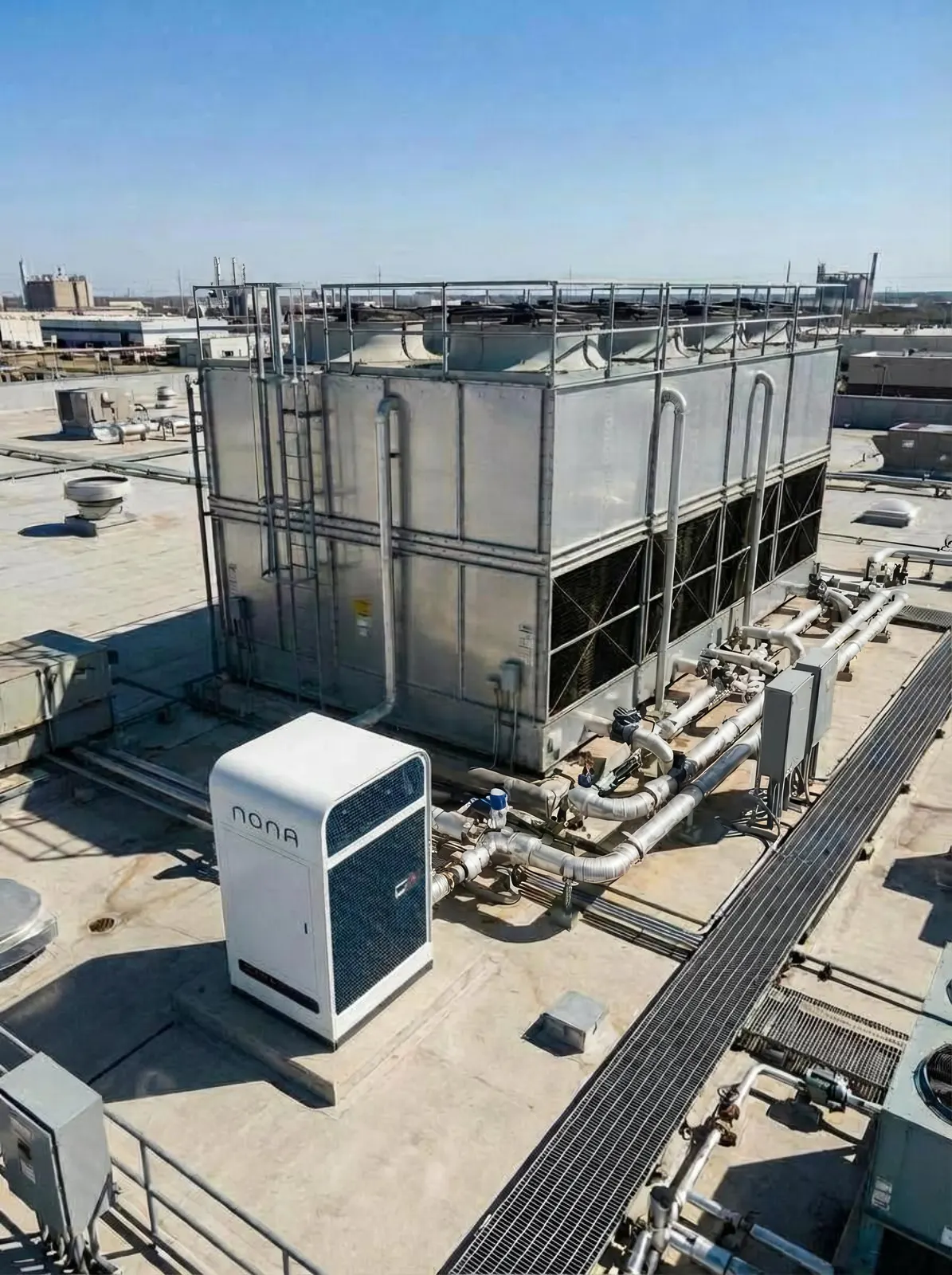
Don't let cooling water cap your data center's growth.
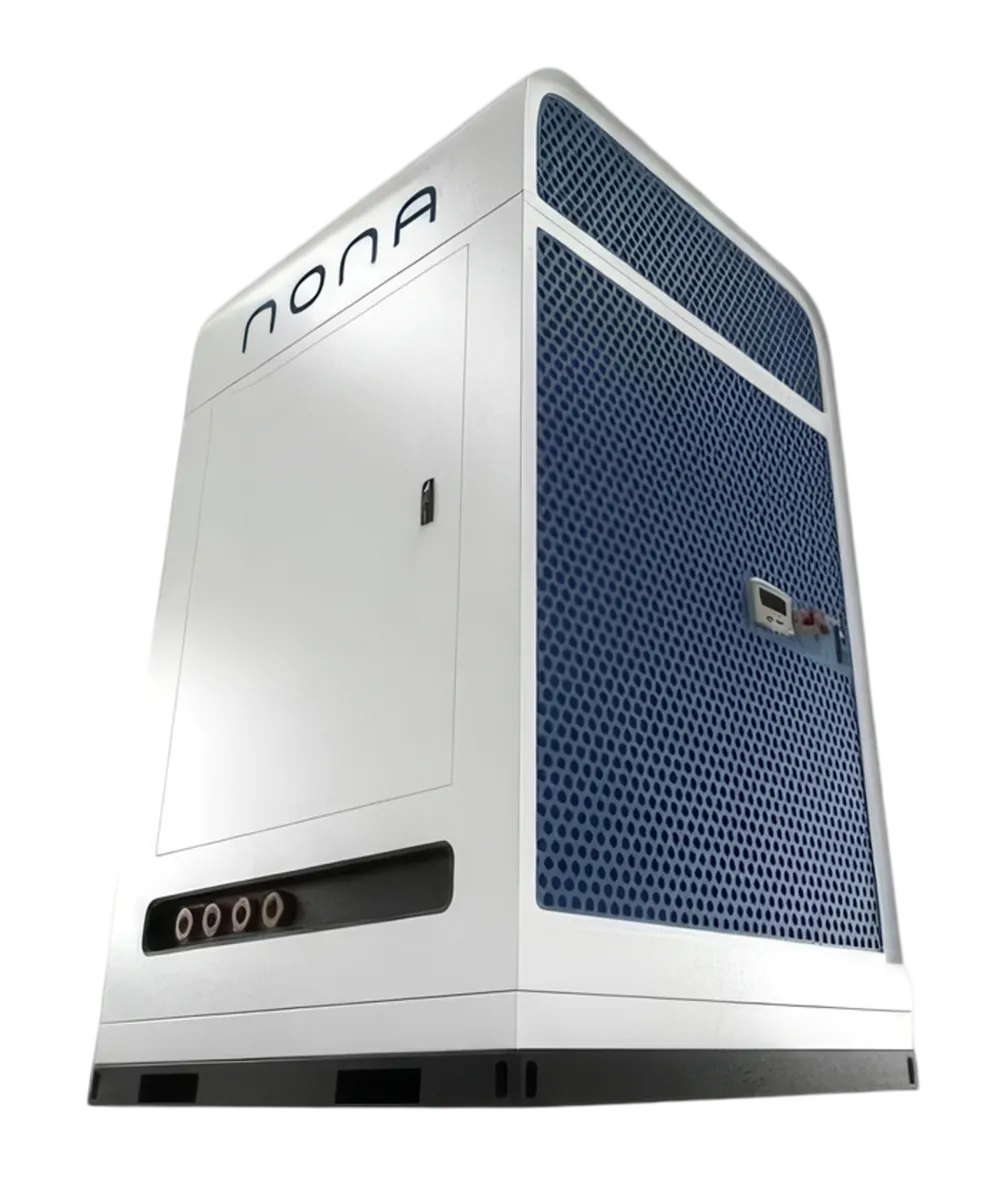
NONA RECOVER treats the liquid blowdown your cooling tower would send to drain. Its MIT-patented Ion Concentration Polarization (ICP) process returns treated water to the loop without replacing the tower. We size recovery from your measured flow and water chemistry.
MIT-patented Ion Concentration Polarization (ICP) · Demonstrated in the field · 90% of treated blowdown return, design target
90%
treated blowdown return target
Up to
50%
reduction in makeup water consumption
Up to
40%
lower cooling water OpEx
Fits right into your existing cooling loop.
Easy to retrofit
A modular retrofit for an existing cooling tower. Confirm piping, controls, and the installation schedule at the site.
Modular
Units can be configured to treat a site-specific blowdown flow. Nona's RECOVER technical sheet gives a nominal 10 GPM feed rate for a unit.
Built tough
Developed from Nona's seawater work for mineral-rich cooling tower blowdown. Feed chemistry still determines treatment fit.
Energy efficient
The electric-field process runs at low pressure. Energy use varies with feed conductivity and the required return-water quality.
High recovery
Designed to return 90% of treated cooling tower blowdown. Compare actual water chemistry and concentrate handling before selecting a recovery system.
Estimate what RECOVER saves your site.
Screen potential blowdown return and water and sewer charges avoided. This estimate uses assumed duty and recovery, not measured site flow or net operating cost.
Your Cooling Tower
Assumes 60% annual operation duty (approx. 5,256 hrs/yr).
WithRECOVER
Potential blowdown returned
13,924kgal/yr
Water and sewer charges avoided
$278,488/yr
Screening figures only. Charges avoided exclude RECOVER energy, maintenance, and capital costs. Confirm tower flow, chemistry, and wet operating hours before using these as site savings.
Request a review of these assumptions
Our team can ask for measured blowdown and water chemistry before estimating site savings.
Screening estimate only. Assumes 60% annual wet operation and 90% treatment recovery of modeled blowdown. Charges avoided are gross water and sewer charges, not net OpEx; they exclude unit energy, maintenance, and capital costs. Confirm measured flow, water chemistry, rates, and wet hours before using a site savings figure.
Not reverse osmosisA different path for the water
Reverse osmosis pushes water through a filtration membrane. ICP uses ion-selective membranes and an electric field while bulk water flows through a low-pressure channel. Both approaches need a site-specific chemistry review.
Forces water through a filtration membrane
Uses an electric field and ion-selective membranes
Passes through the filtration membrane
Moves through a low-pressure flow channel
Depends on feed and system design
RECOVER technical range: 5–30 PSI
Pretreatment depends on chemistry and additives
Review chemistry, reuse quality, and concentrate handling
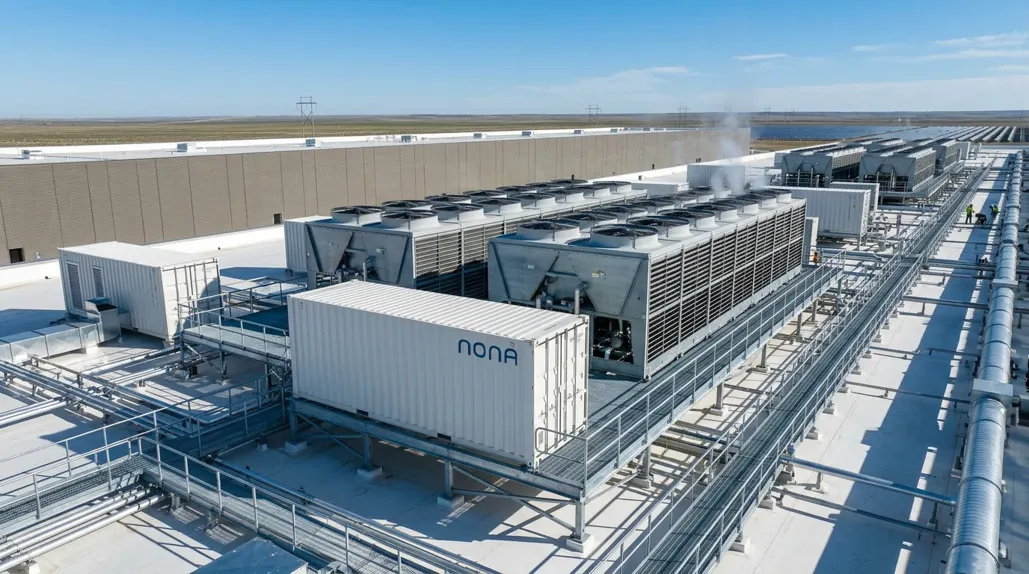
Water can become a hard limit on data center growth.
Water availability, infrastructure, and operating conditions vary by site. Transparent water accounting helps developers, utilities, and communities evaluate demand, discharge, and practical reduction options without relying on one national average.

Desalination science aimed at AI's water waste.
Nona Technologies applies cutting-edge desalination science to cooling water recycling. Spun out of MIT, our patented Ion Concentration Polarization process was built to turn seawater into drinking water — now it closes the loop on industrial cooling water, recovering what facilities would otherwise pour down the drain.
Learn more about NonaNews & updates
Latest from Nona
Field notes, interviews, and findings on the AI water problem, evaporative cooling, and closing the loop on industrial water.

The water and energy tradeoff behind data center cooling
Bruce Crawford shares what data center engineers told Nona in Dallas, why onsite water and electricity must be evaluated together, and how transparency can build community trust.
Read more
Our RECOVER unit 'Hudson III' is headed to a data center pilot
Hudson III ships out to continuously and autonomously remove minerals from a data center's cooling water. Once installed, the facility saves water, cuts cost, and protects its heat exchange equipment.
See the launch
What is data center cooling water recovery?
Cooling water recovery treats liquid blowdown so it can return to the cooling loop instead of being discharged. NONA RECOVER continuously demineralizes that water on site using Ion Concentration Polarization (ICP), an MIT-patented alternative to reverse osmosis.
See what RECOVER saves your facility.
Start with tower size and local water costs. Confirm operating hours, measured blowdown, and water chemistry with our technical team before relying on a savings estimate.